




Description
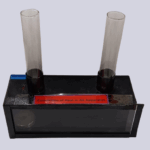
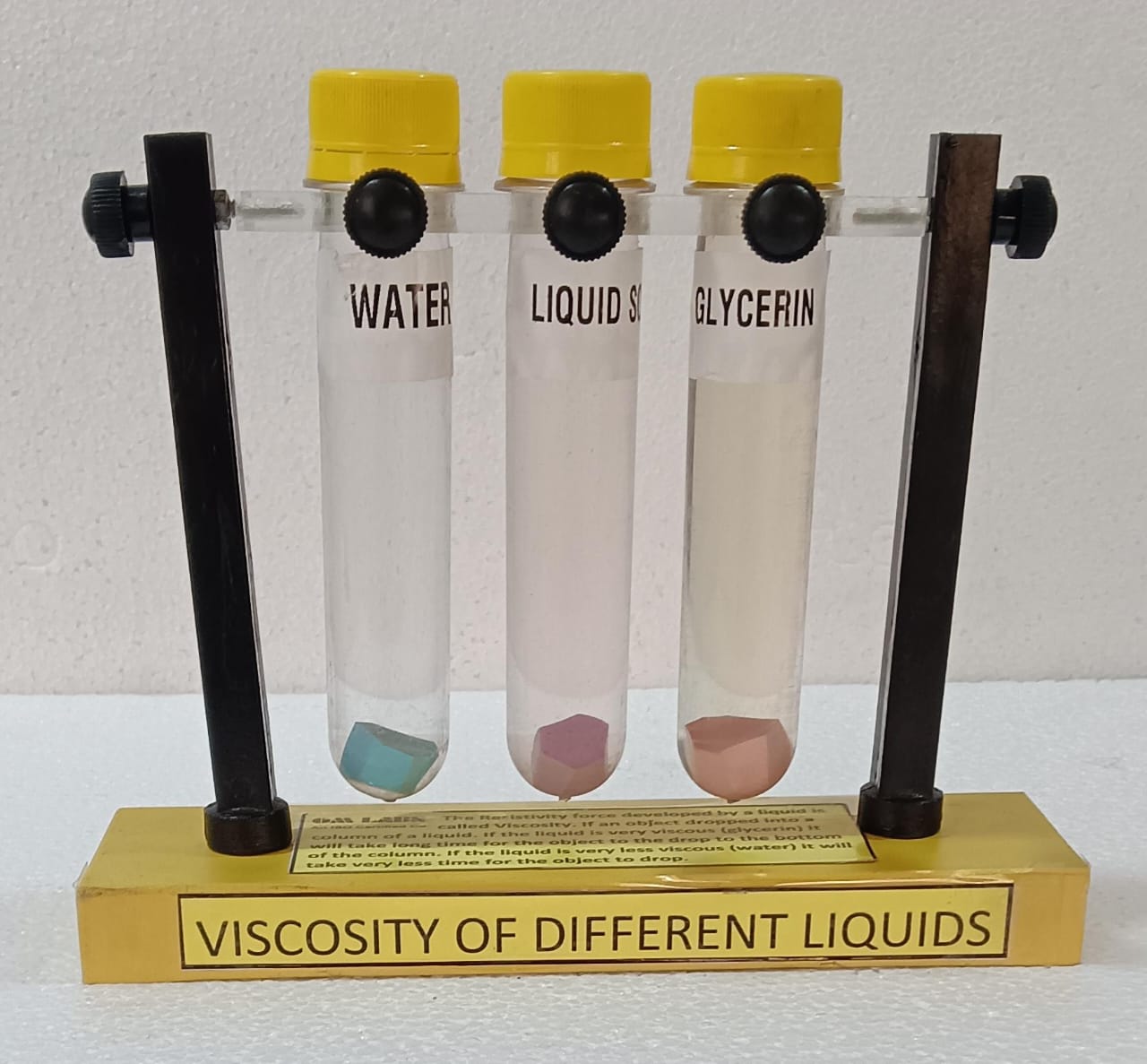
Specification: The Resistivity force developed by a liquid is called its viscosity. If a solid object is dropped in a column of liquid, it will travel downward depending on the viscosity of the liquid in which it is dropped. If the liquid is very less viscous (water) it will take very less time for the object to drop.”
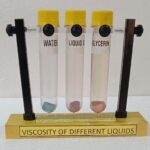
Liquids Used (Left to Right):
- Water
- Liquid Soap
- Glycerin
Components:
- Three transparent test tubes with yellow screw caps.
- A supporting frame to hold the test tubes upright.
- Labeling on each test tube to identify the liquid inside.
- Solid colored objects placed in each tube to observe their movement through the liquids.
Working Principle: This setup demonstrates the relative viscosity of different liquids by observing the time it takes for a solid object to sink to the bottom:
- Lower viscosity (e.g., water) → Object sinks quickly.
- Higher viscosity (e.g., glycerin) → Object sinks slowly.
Conclusion: This is a visual and practical tool often used to compare the viscosity of different liquids. The test shows:
- Water has the lowest viscosity.
- Glycerin has the highest viscosity.
- Liquid soap has a moderate viscosity.